
Offshore Support Vessel naar Guyana
Januari 2026
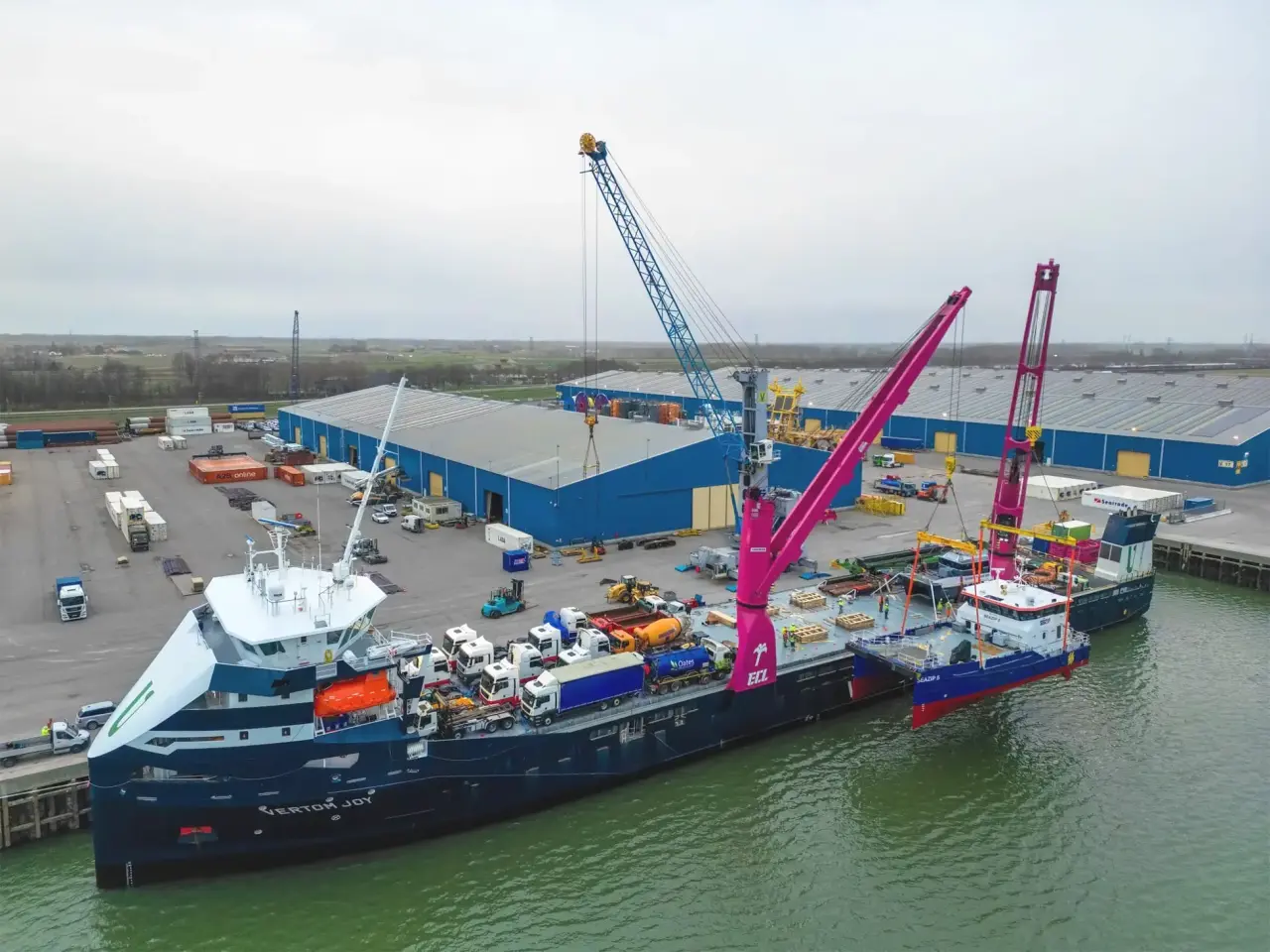
In the water in Vlissingen, a special cargo is ready. Not a steel structure or heavy machine, but a complete vessel: a 100-ton offshore wind support vessel. It is destined for Guyana, where it will be deployed in offshore operations.
ECL (Europe Caribbean Line) was tasked with transporting this support vessel safely across the Atlantic Ocean, a shipment that requires more than just lifting capacity.
Project details
- Cargo: Offshore wind support vessel
- Weight: 100 metric tons
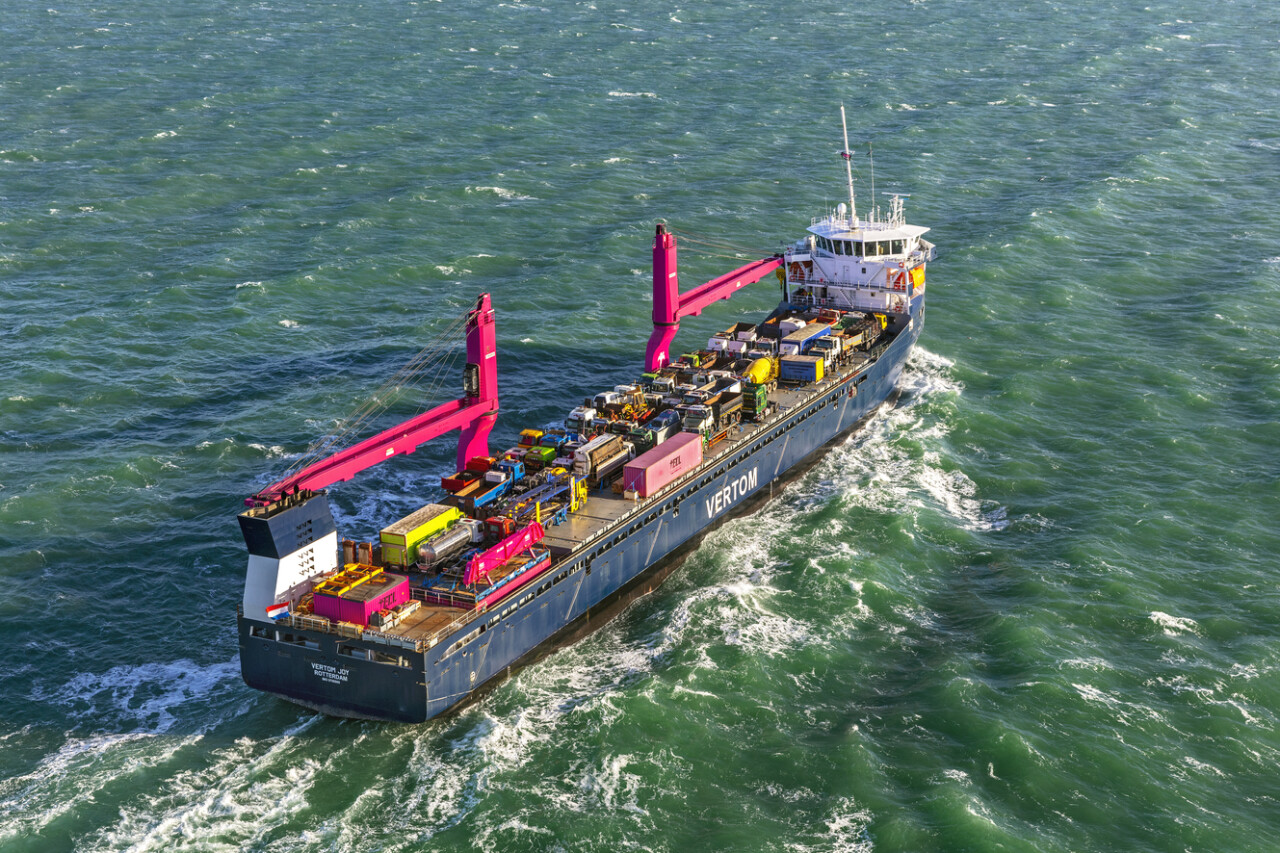
- Vessel: Vertom Joy
- Route: Vlissingen to Georgetown, Guyana
The challenge: aluminum requires precision
This support vessel is built from aluminum—light, strong, but also fragile. While a steel hull can take a hit, aluminum demands a different approach. Every lashing strap, every lashing point, every contact surface must be carefully chosen to prevent damage.
The real challenge, therefore, was not the lifting, but securing it for sea. How do you ensure 100 tons of delicate material can withstand weeks at sea without a single scratch on the hull?
The answer: skill and preparation. The lashing plan was developed in meticulous detail. Protective materials were placed at every contact point. Tension in the lashings was strong enough to hold, but not so tight that the aluminum would deform.
“With aluminum, you can’t just lash and hope for the best. Every contact point must be protected, every force distributed. You’re not just handling weight, you’re handling material knowledge. If that vessel leaves the deck in Guyana without a scratch, you’ve done your job right.”
Supercargo, ECL
Safe to shore
After weeks at sea, the Vertom Joy arrived in Georgetown. The offshore support vessel was unloaded just as it was loaded: without damage and ready for deployment. A testament that ECL can handle not only heavy cargo but also the fragile.
With over 40 years of experience, ECL knows that every shipment is different. Sometimes it’s about tonnage, sometimes speed, and sometimes the care with which you handle the cargo.
Do you have a special cargo that requires extra attention? Contact us to explore the possibilities.
Ready to ship your cargo to the Caribbean?
This website uses cookies
We use cookies to improve your experience. Read more